AI has already entered everyday work. It drafts emails, summarizes meetings, structures documents and supports research. But this is still AI as an assistant: useful, reactive and mostly individual.
The next step is different. AI becomes more valuable when it holds context across meetings, recognizes patterns over time, surfaces delivery risks and supports the team inside its actual flow of work.
The Shift from Assistant to Team Member
Microsoft describes this shift as the rise of the Frontier Firm: an organization where humans remain in the lead while agents increasingly support, coordinate and operate parts of the work.
The development can be understood in three phases:
- Phase 1: Employees use AI assistants for individual productivity.
- Phase 2: Agents become digital colleagues that take on specific tasks under human direction.
- Phase 3: Humans set direction while AI supports workflows, checks in when needed and keeps work moving.
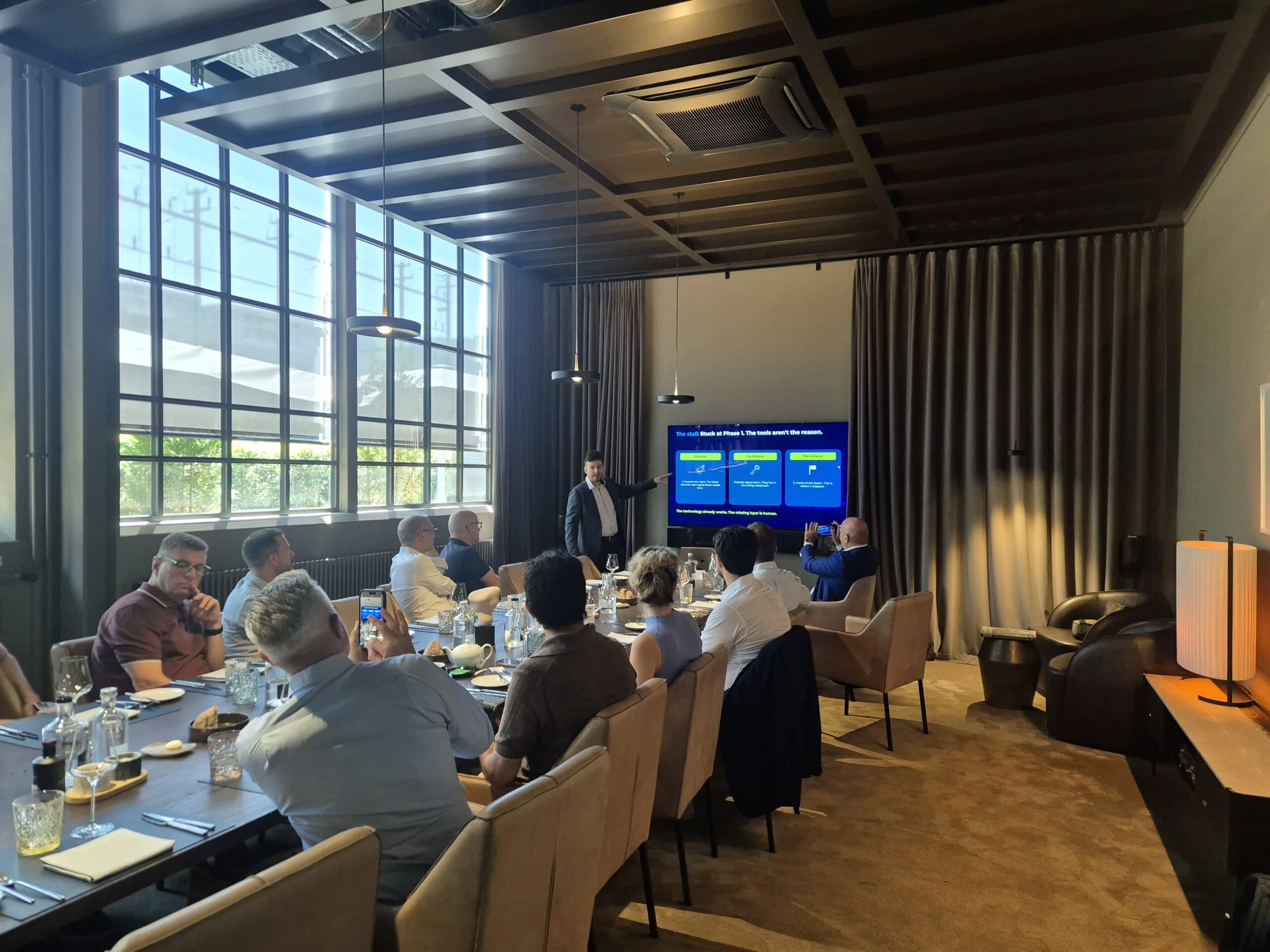
Many organizations are currently between phase one and phase two. They have adopted AI assistants, but they have not yet embedded AI into the way teams make decisions, manage dependencies and deliver outcomes.
This is where the real challenge begins.
Many AI pilots create excitement at the start. The demo works, the first tests are promising and licenses are rolled out. But after the initial curiosity fades, usage often drops.
Not because the technology is useless. But because it has not become part of how work actually happens.
Trust, acceptance, governance and integration into daily routines matter as much as model capability.
Why Were AI Assistants So Easy to Adopt?
AI assistants spread quickly because they create immediate value with very low friction.
They help people draft, summarize, structure and research. They do not usually change systems in the background, overwrite decisions or interfere with accountability. They suggest, and the human decides.
That principle matters.
If AI is to move from personal assistant to active team member, it must preserve the same sense of control. Teams need to feel that AI helps them see more clearly, not that it silently takes over.
What Makes AI Valuable in a Team?
A good AI solution for teams is not simply the most powerful or the most autonomous one. What matters is how well it fits into collaboration.
It suggests. The human decides.
It makes risks visible, but does not escalate blindly. It identifies possible action items, but the team confirms them. It recognizes connections, but does not silently change project boards, backlogs or status information.
This restraint is not a weakness. It is the foundation of trust.
The uncomfortable truth is that software alone does not change how teams work.
The tool may be ready, but the organization also needs the operating model around it: clear guardrails, defined accountability, shared expectations and enough trust to let the solution support real work.
AI must be perceived as support, not as control. It should relieve pressure, improve visibility and help teams stay aligned. It should not feel like another monitoring layer.
Why This Matters in Large Projects
In small AI pilots, it may go almost unnoticed when usage drops after a few weeks. The channel goes quiet, licenses remain unused and the effect fades away.
In large technology and transformation projects, the same pattern becomes much more serious.
Limited visibility, delayed decisions, unresolved dependencies and fragmented coordination can quickly become expensive and business-critical.
Three Swiss examples show how quickly delivery risk can become visible and expensive: the Swiss Army with CHF 240m for the SAP programme “ERP Systeme V/ar”, whose logistics component was stopped in 2023 as not feasible. Raiffeisen with CHF 47m for a failed banking app. And the State Secretariat for Migration with around CHF 193m of the originally budgeted CHF 66m for the renewal of “ZEMIS”.
These examples differ in context and outcome. But they point to a common pattern in large transformation work: when coordination becomes too heavy, risks surface too late and decisions remain open for too long, the cost of delayed visibility becomes significant.
This is where AI can create value beyond note-taking.
The opportunity is not just to summarize meetings. It is to support the flow of work: identify risks earlier, connect signals across systems, help teams follow up and bring relevant context into the moments where decisions are made.
PMEOS as an AI Execution Layer
This is the problem PMEOS is designed to address.
PMEOS is AgileAdvant’s AI execution layer for modern project delivery teams. It connects meetings, project context and delivery tools so that teams can identify risks earlier, follow up more consistently and reduce manual coordination effort.
It is not designed to replace existing systems. It works across the tools teams already use and brings the relevant context back into the conversation where decisions are made.
In practice, PMEOS can support a stand-up or project meeting by working with the available project context. It detects signals such as stalled tickets, open dependencies, unresolved risks or action items that were mentioned but not followed up.
Instead of silently changing the system, PMEOS brings these signals into the meeting. It can suggest an action item, propose an owner and capture the decision once the team confirms it.
After the meeting, PMEOS helps keep track of open points and highlights where follow-up is needed.
PMEOS suggests. The human decides.
That changes the work of project teams: less time spent on manual coordination and status chasing, more time for judgment, prioritization and leadership.
That is the real value of an execution layer in teams. It does not take human work away. It helps people focus on the work where human quality matters most.
Learn more about PMEOS, AgileAdvant’s AI execution layer for modern project delivery teams. -> agileadvant.com/en/pmeos
The Question Every Team Should Ask
The real question is not whether AI will become more capable. It will.
The question is whether teams are ready to define where AI should support, where humans must decide and how trust is built in daily work.
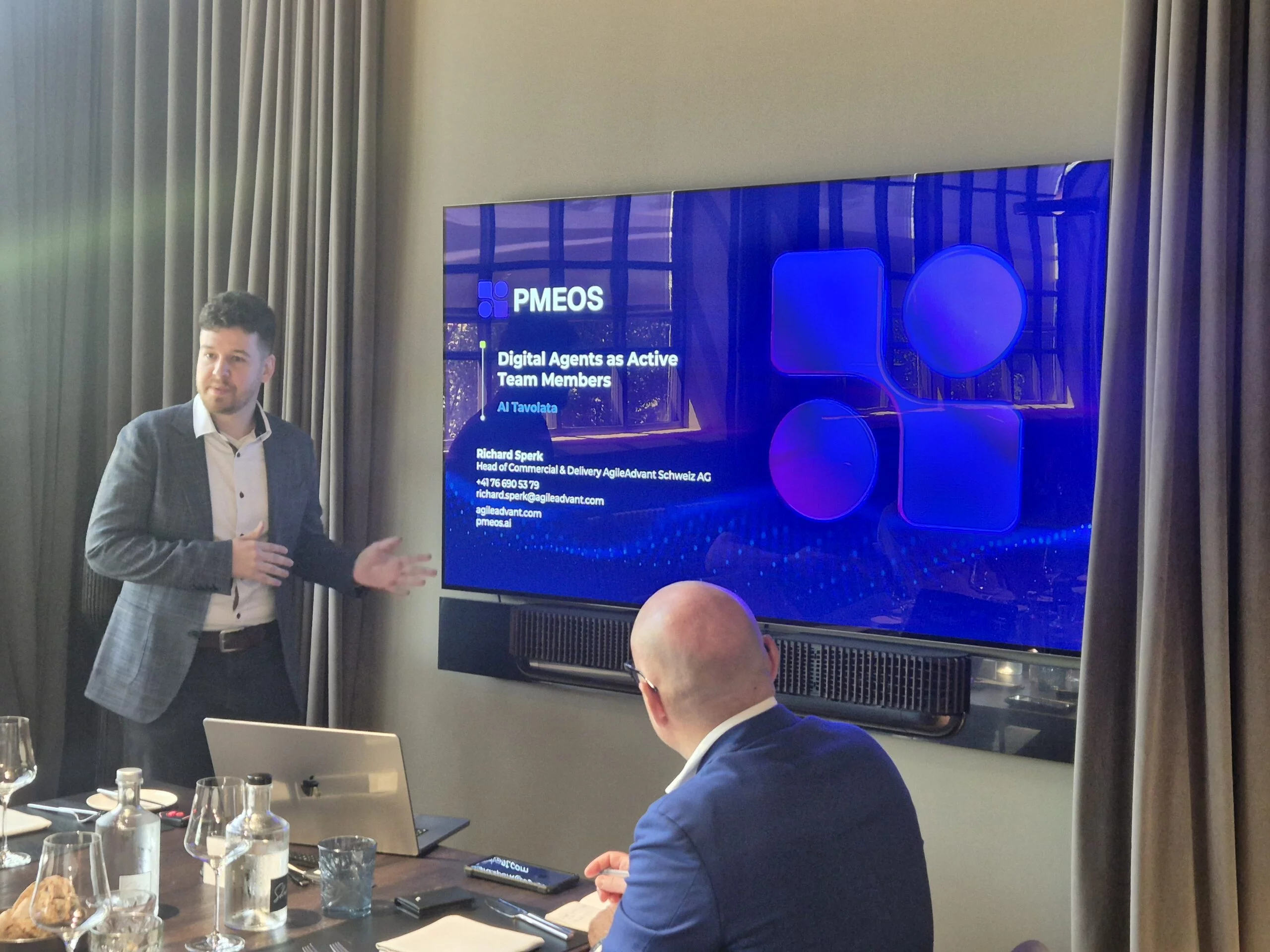
Richard closed the discussion with a question that every project team can ask itself:
Which task would you delegate to an agent first, and under what condition would you trust it to take over independently?